Fractal Graphene™ for Conductive Compounds
More conductivity, less filler, lower cost.
The conductive plastics industry has relied on conductive carbon black for decades as the established commercially available solution, however emerging hybrid alternatives now offer greater conductivity and materials performance. HydroGraph’s Fractal Graphene™ (FGA-1) resolves those limitations and helps you get more from your existing carbon black formulation.
Adding ultra-low additions of Fractal Graphene to conductive carbon black creates a more efficient conductive network. The result is up to 100x higher conductivity, with opportunities to achieve demanding conductivity targets using less filler, reduce material cost and improve processability.
HOW THE HYBRID WORKS
Two conductive fillers. One more efficient conductive network.
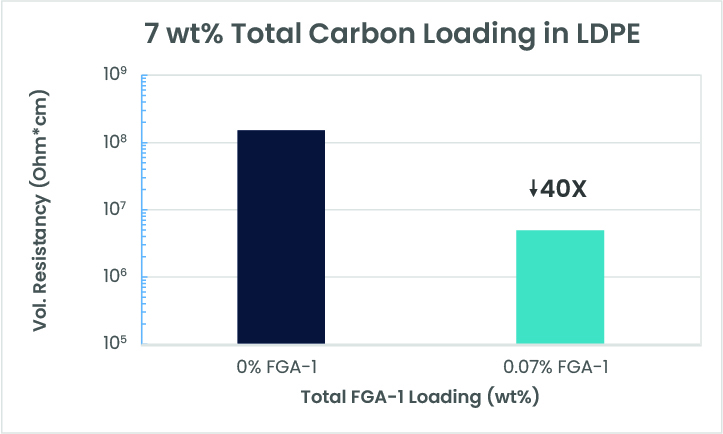
FGA-1 added to carbon black delivers up to 100x higher conductivity compared with carbon black alone at the same total carbon loading.
Combining conductive fillers to form a hybrid system can create more efficient electrical pathways within a polymer matrix, helping achieve higher conductivity with lower total filler loading. HydroGraph’s Fractal Graphene™ (FGA-1) works synergistically with conductive carbon black, enhancing the conductive network, maintaining materials performance characteristics and allowing compounders to get more performance from their existing formulations.
Made by detonation synthesis in HydroGraph’s patented Hyperion process, FGA-1 is 99.8% pure carbon with a uniform few-layer morphology. As a synthetic and highly controlled process, every batch is identical. These attributes enable even ultra low loading levels to significantly enhance electrical conductivity, enabling manufacturers to achieve target resistivity with less carbon black, reduced conductive filler costs, and improved formulation efficiency.
FGA-1 works with the carbon black, compounding equipment and processes you already run. Fractal Graphene is supplied today as a dry powder that you premix with your carbon black, or it can be sourced as a compound or masterbatch by HydroGraph’s preferred compounding partners.
- Ultra-low addition rates: Typical addition of <0.1% FGA-1 by weight of the compound
- Enhanced Conductivity: Up to 100× higher conductivity compared to carbon black alone
- Lower filler requirements: Achieve target conductivity with less carbon black, creating opportunities to reduce total conductive filler loading
- Reduced material costs: Lower carbon black requirements can deliver conductive filler cost savings, depending on formulation and carbon black grade
- Practical Integration: Works alongside the conductive carbon black grades and processes compounders already use
- Demonstrated versatility: Electrical performance improvements Proven in thermoplastics (LDPE) and thermosets (epoxy) across multiple carbon black grades
- Consistent material quality: 99.8% carbon, 100% sp² structure, and controlled morphology for dependable batch to batch quality
Advanced Carbons Council Verified Producer®
The only certified graphene manufacturer in the Americas — third-party inspected facilities, production methods, and QC.
THE CORE PROBLEM WE SOLVE
Higher Conductivity. Less Filler. Lower Cost.
CARBON BLACK ALONE
Conductivity through higher loading
- Higher loading requirements. Achieving demanding conductivity targets often requires increasing carbon black content, adding to formulation cost
- Higher processing demands. Increased filler loading can raise viscosity and make dispersion, extrusion, and molding more challenging.
- Trade-offs in mechanical properties. High carbon black loading can reduce flexibility, elongation, and toughness in some polymer systems.
- Rising conductive filler costs. Meeting conductivity targets with premium carbon black grades can significantly increase formulation costs.
- Limited formulation flexibility. Alternative conductive additives such as carbon nanotubes (CNTs) can introduce additional costs, unique dispersion challenges, processing and handling complexity.
FGA-1/CARBON BLACK HYBRIDS
Conductivity through network efficiency
- More conductivity with less filler. Ultra-low FGA-1 additions create a more efficient conductive network, enabling higher conductivity at the same loading or hitting target conductivity with less carbon black.
- Improved processing potential. Lower total filler requirements can improve material flow and ease processing, supporting more efficient manufacturing.
- Greater formulation flexibility. Reducing conductive filler content can help preserve the mechanical properties of the polymer while maintaining electrical performance.
- Lower material costs. Replacing a portion of conductive carbon black with ultra-low FGA-1 additions creates opportunities for significant conductive filler cost savings.
- Your existing carbon black, enhanced. FGA-1 is designed to complement conventional carbon black systems, helping compounders improve performance without completely changing their conductive filler approach.
TARGET APPLICATIONS
Built for compounds where conductivity, processability and cost all matter.
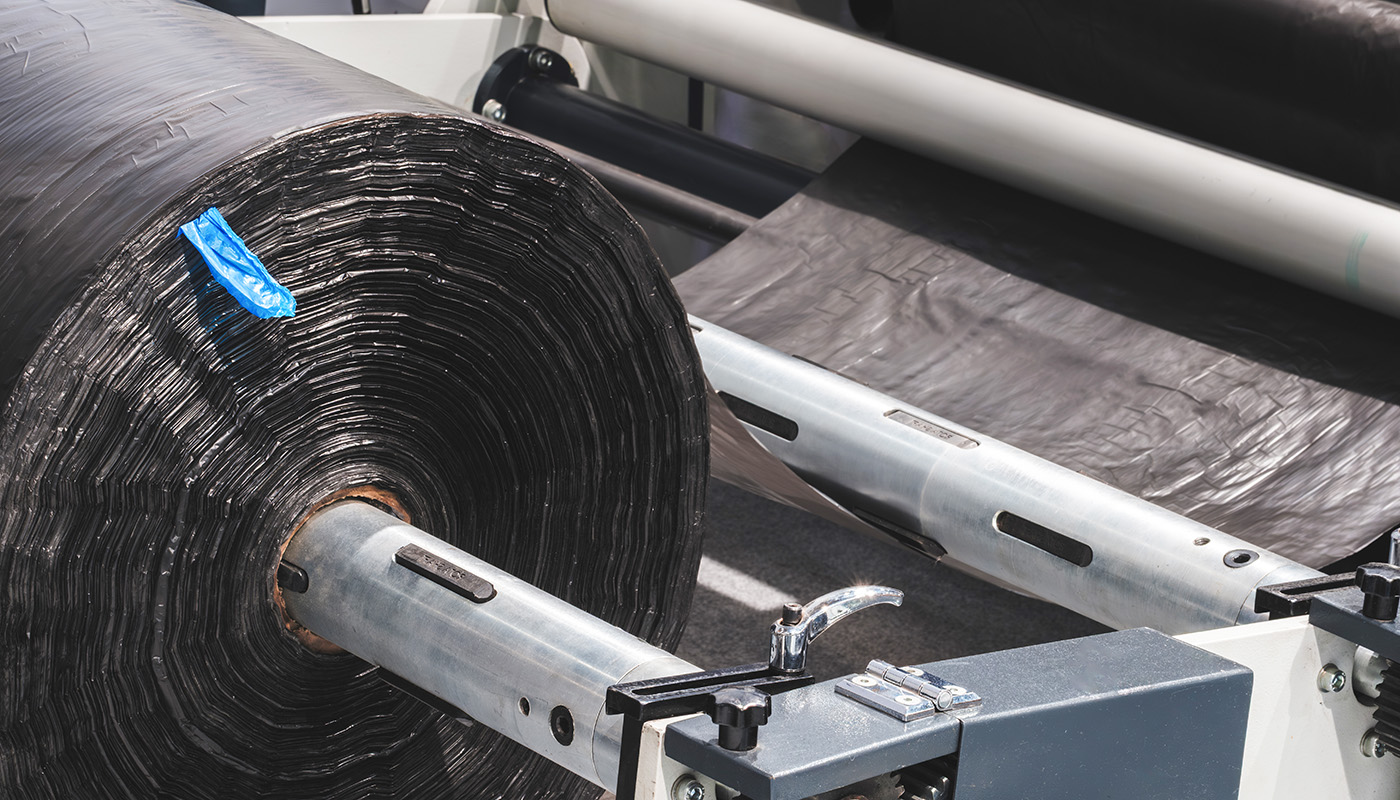
Compounders and masterbatch producers use Fractal Graphene (FGA-1) alongside conductive carbon black to develop conductive, ESD and antistatic plastics. FGA-1 has been demonstrated in thermoplastic (PE, PP etc.) and thermoset (epoxy) systems, and suits applications wherever static must be controlled or current conducted, across electronics, automotive, industrial packaging, chemical and hazmat handling, healthcare, and aerospace and defense.

ESD and Antistatic Parts
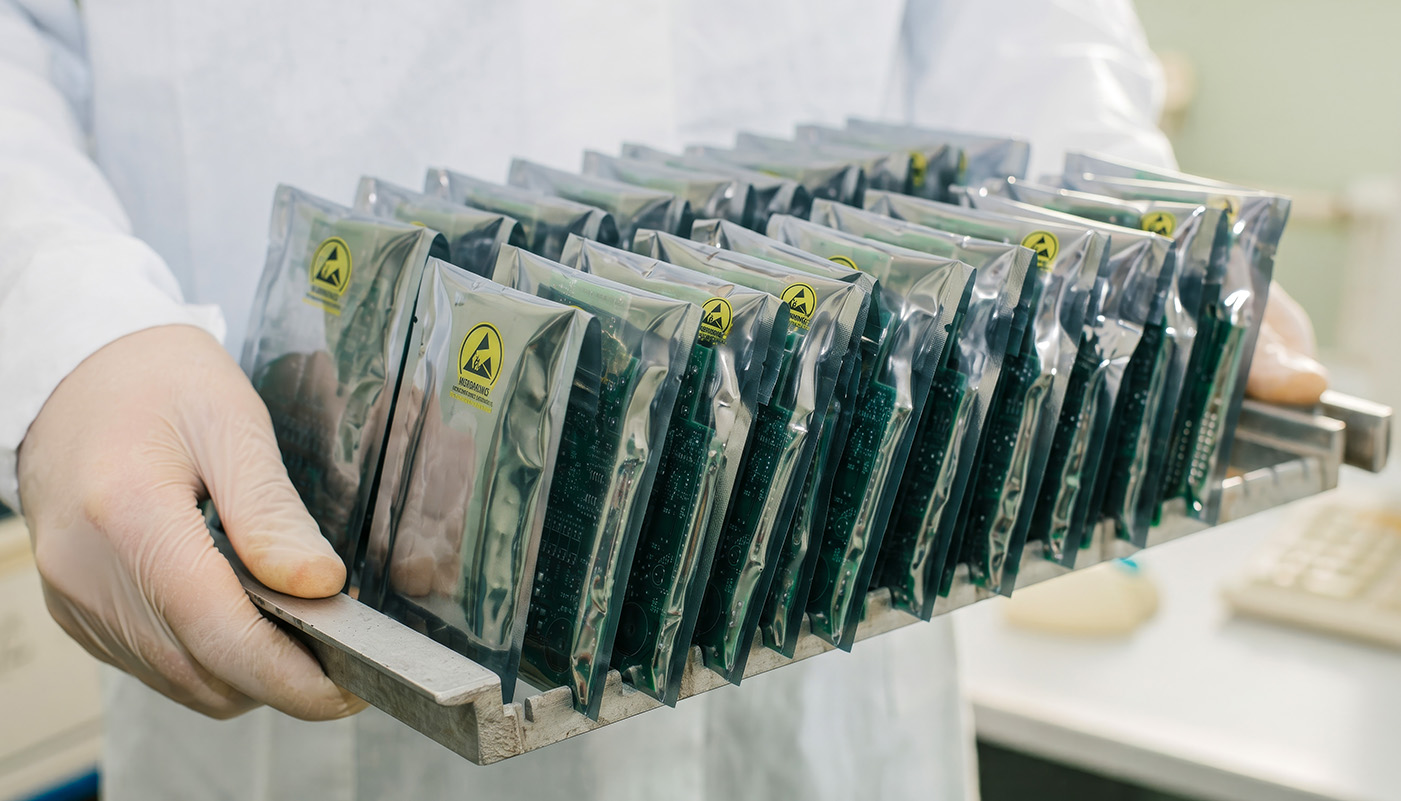
Trays, totes, films and housings that protect sensitive electronics. Reach static-dissipative targets with less carbon black and cleaner processing.
Fuel System Components
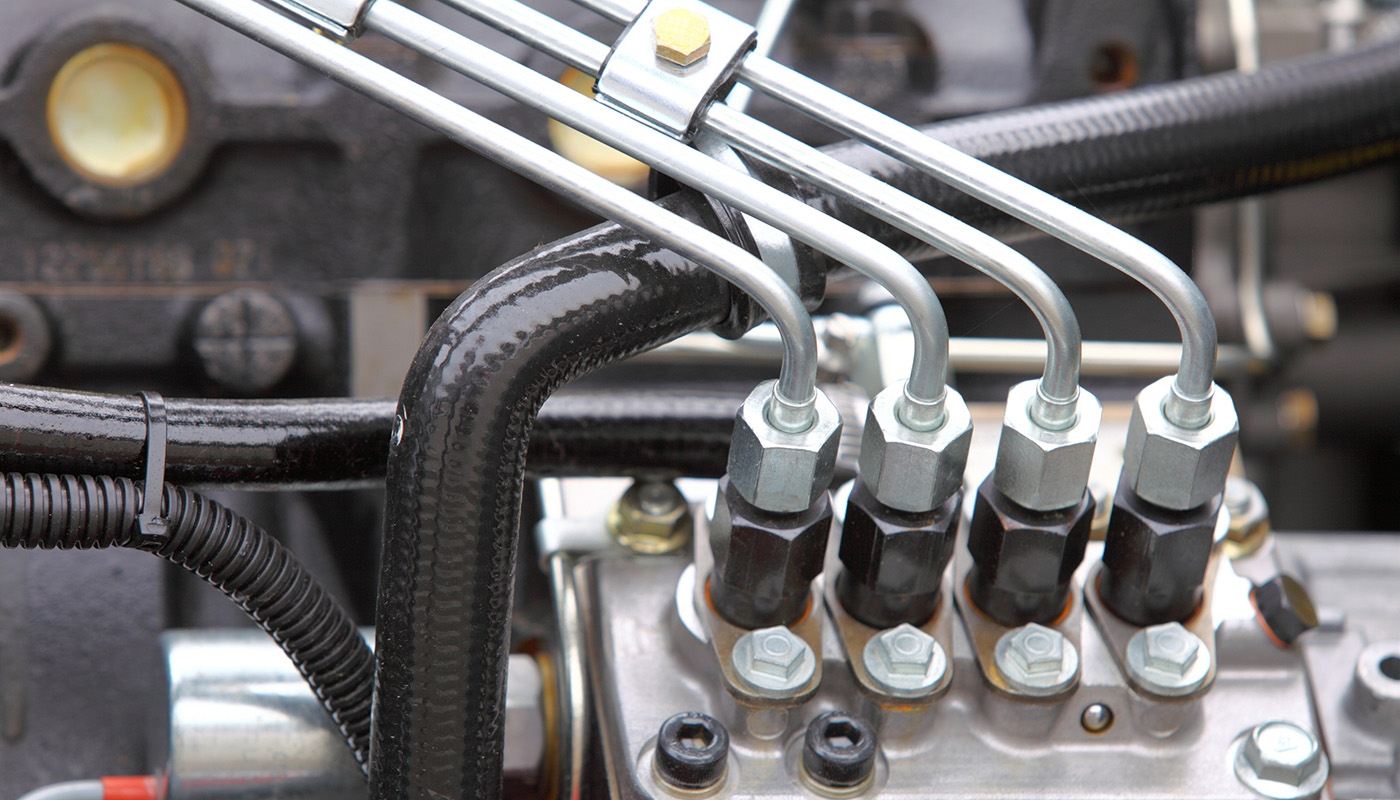
Conductive tanks and multilayer fuel systems where static control is a safety requirement and mechanical integrity cannot be compromised.

Flammable Liquid and Powder Handling
Static-dissipative containers, drums and handling equipment for chemical, hazmat and powder environments.

Enhance conductive plastics surface resistivity across
a broad range by hybridizing with FGA-1
WHY HYDROGRAPH'S HYBRID CONDUCTIVE SYSTEM
Performance and cost benefits.
<0.01 wt.%
Typical FGA-1 addition demonstrated to significantly enhance performance
Up to 110×
Reduction in volume resistivity acheivable
Up to 50%
Reduction in conductive carbon in your formulation
Up to 22%
Lower conductive-carbon cost
Proven in Thermoplastics and Thermosets
The hybrid effect holds across polymer families. In both systems below, a fixed total carbon loading was split between carbon black and Fractal Graphene, and resistivity was measured against carbon black alone.
In Thermosets
In Thermoplastics
Results depend on polymer, carbon black grade and processing. Request a sample to test in your formulation.
Three ways to win with FGA-1/carbon black hybrids:
One:
Same cost, higher performance
Achieve significantly higher conductivity at comparable conductive filler costs by adding ultra-low levels of Fractal Graphene™ to your existing carbon black formulation.
Two:
Higher performance, lower cost.
Reduce carbon black requirements and conductive filler costs while improving electrical conductivity, with particularly attractive savings potential when using premium conductive carbon black grades.
Three:
Same performance, lower loading.
Maintain target conductivity with less total conductive filler, creating opportunities for improved processability, better preservation of mechanical properties, and more efficient production.
HOW IT COMPARES
Conductive Filler Systems Compared.
How the FGA-1-Carbon Black Hybrid compares with the conductive fillers compounders use today.
ATTRIBUTE | FGA-1 HYBRID CONDUCTIVE SYSTEM | STANDARD CARBON BLACK | PREMIUM CARBON BLACK | CARBON NANOTUBES | CONDUCTIVE GRAPHITE |
|---|---|---|---|---|---|
Conductivity | ✓ Better | Good | Better | Best | Better |
Percolation threshold | ✓ Better | Good | Better | Best | Good |
Formulation cost | ✓ Best | Better | Good | Good | Better |
Processability | ✓ Best | Better | Better | Good | Better |
Mechanical properties | ✓ Best | Good | Better | Better | Better |
Handling hazard | ✓ Better | Better | Better | Good | Best |
CASE STUDY | DB CHEM CO., LTD.
Half the Carbon Black. Target Conductivity Achieved.
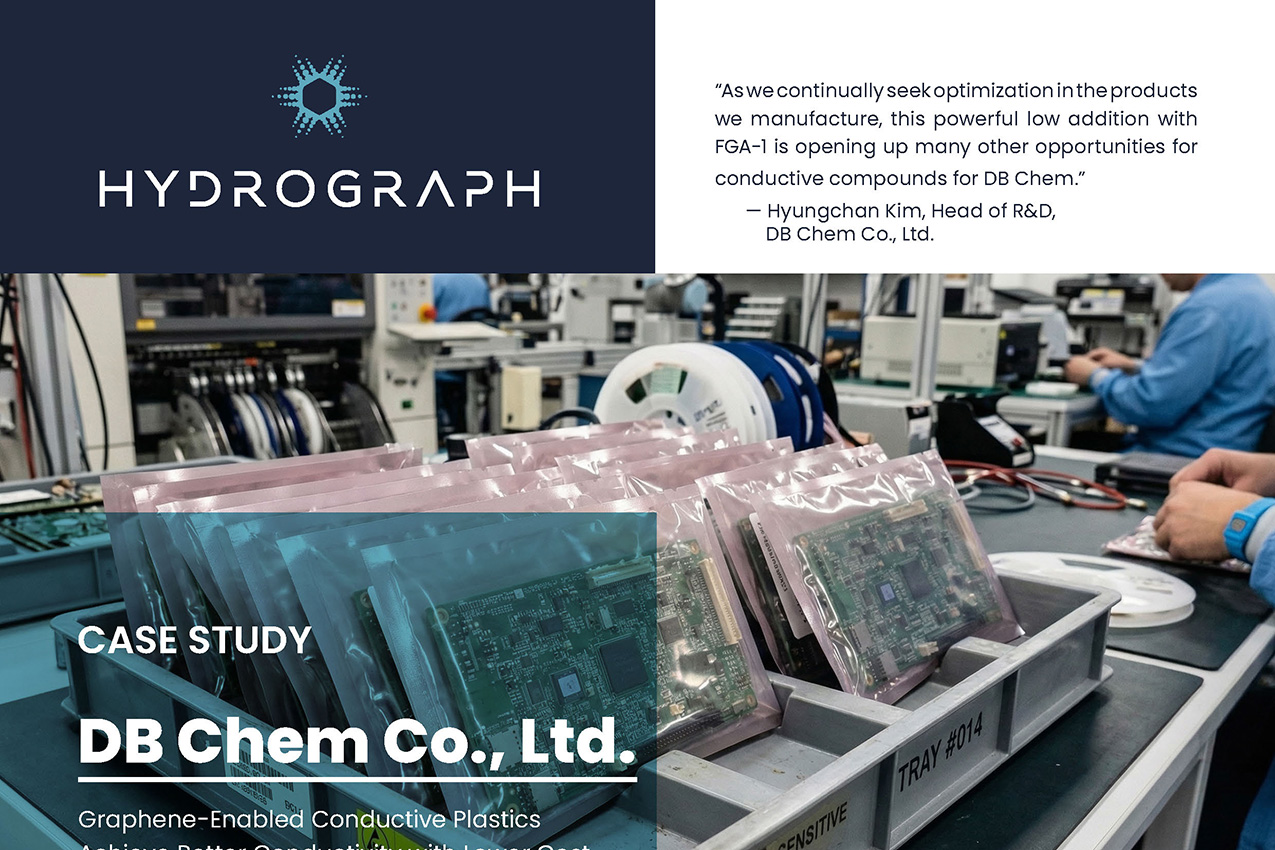
DB Chem needed reliable ESD performance in a conductive LDPE film for tarpaulin applications, with a surface resistivity target of 10⁶ to 10⁸ Ω/sq. The only cost-viable carbon black grade could not form an effective conductive network, even at 30% loading. High-structure grades conducted better but blew the formulation budget, and adding more filler hurt formability without closing the gap.
DB Chem moved to a hybrid. Halving the carbon black to 15% and adding 0.2% Fractal Graphene reached the target resistivity at comparable formulation cost, with improved formability and material performance.
Incorporating a small FGA-1 addition rate into a conventional carbon black system can significantly improve surface resistivity, enabling a lower total carbon addition rate, better formulation efficiency, and a more cost-effective compound.
Hyungchan Kim, Head of R&D, DB Chem Co., Ltd.
RELATED PRODUCTS
The HydroGraph Product Family.
PRISTINE GRAPHENE POWDER
Fractal Graphene™
HydroGraph’s flagship graphene powder — 99.8% carbon purity, highly crystalline, turbostratic, few-layer graphene aggregates with the unique fractal structure that delivers performance at low loading levels.
View Product →
FUNCTIONALIZED GRAPHENE POWDER
Reactive Graphene™
Functionalized Fractal Graphene™ with carboxylic acid surface groups — engineered for applications requiring additional reactivity.
View Product →
DISPERSION FORM
Fractal Graphene Paste™
HydroGraph’s aqueous dispersion of Fractal Graphene™ – 20% concentration, fully stabilized and shelf-stable for 2+ years. Engineered for direct integration into water-based formulations for concrete, coatings, elastomers, cooling systems and more with no specialist equipment required.
View Product →
REQUEST A SAMPLE
Start Your FGA-1 Evaluation
HydroGraph offers limited samples of Fractal Graphene to qualified compounders, masterbatch producers and materials engineers working on conductive formulations. Our application team will help you choose a starting FGA-1/carbon black ratio for your polymer and conductivity target, then support your compounding trials through to qualification and scale-up.
The Future of Graphene is Fractal
Discover how HydroGraph’s Fractal Graphene™ achieves better performance at 10-100 x lower loading levels than conventional graphene.
RESOURCES
Go Deeper on FGA-1 for Conductive Compounds

Download the Flyer
An overview of the FGA-1 in Conductive Compounds, performance data and target applications.
Read the Case Study
How a 0.2% Fractal Graphene addition boosted conductivity and halved carbon black in a commercial ESD film.

Download the TDS
Full specifications for Fractal Graphene powder.