

Pipeline access to acetylene means the graphene you’ve been waiting to formulate with is no longer a capacity question – it’s an opportunity question.
Inspired by questions posed by innovative engineers, scientists and researchers across industries, this series is designed to provide salient answers to ignite your material change.
What makes the strategic gas supplier partnership critical for HydroGraph commercially?
Let’s be honest, creating a supply that can keep up with demand has been a perennial challenge for advanced materials. Graphene has historically been one of the most-promised, under-delivered super materials of the past two decades – not because the science failed, but because the supply chain kept tripping over itself. Sometimes literally.
That was then.
“Now that we have negotiated pipeline access to acetylene with this gas supplier, we have at least theoretically unlimited production capacity.”
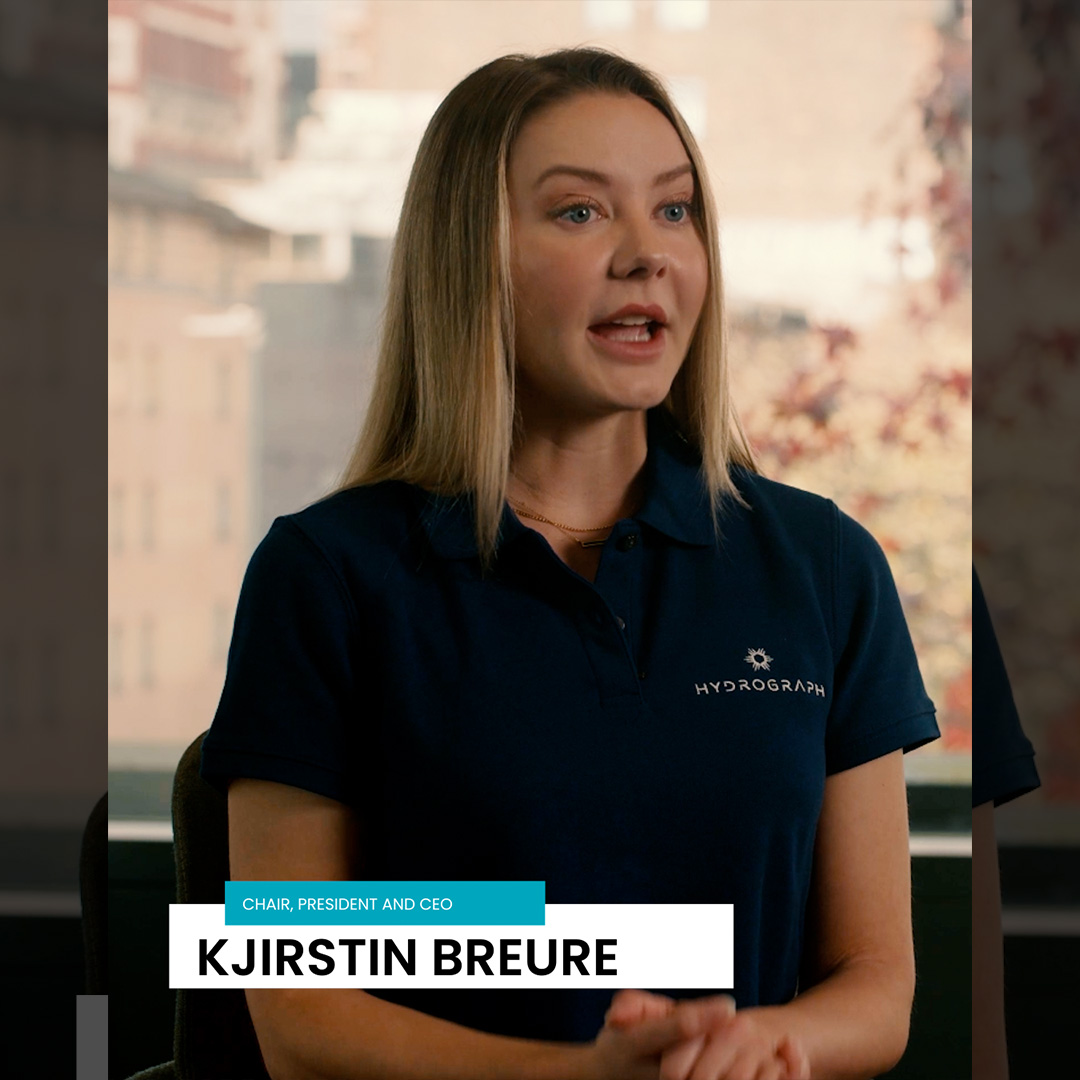
— Kjirstin Breure, Chair, President & CEO, HydroGraph
In this installment of our AMA video series, HydroGraph’s CEO Kjirstin Breure pulls back the curtain on the strategic gas supplier partnership that fundamentally changes what’s possible for scalable graphene production for industrial applications. For engineers and scientists who’ve been watching graphene remain perpetually on the bleeding-edge of materials innovation, that sentence deserves to land.
Why should you care? Because your next product roadmap does.
If you’re formulating lubricants to reduce friction in extreme-load environments, or engineering composites that need to shave weight without sacrificing tensile strength, or developing coatings that must resist corrosion through a decade of UV exposure, or pushing the performance envelope on cement that needs to cure stronger and last longer – you’ve probably heard the graphene pitch before. And you’ve probably run into the same wall: not enough of it, not consistently pure enough, not at a price that makes commercial sense.
Why acetylene pipeline access is a different game entirely
- Micro bulk packs (nine cylinders roped together) carry strict transport, storage, and quantity restrictions – each one a hard cap on output.
- Pipeline access removes those discrete constraints and replaces them with continuous, regulated flow – the same infrastructure model that turned natural gas from a curiosity into a global energy backbone.
- For HydroGraph’s Hyperion production system – already the lowest-energy, zero-waste graphene production process in the industry – pipeline access means throughput is now limited by demand, not by how many cylinders you can legally keep on site.
What “theoretically unlimited” means for your formulation
Here’s the question worth sitting with: how many times have you been handed a material sample that performed beautifully at bench scale, only to find that scaling it into a production run exposes a supply chain that can’t actually support volume? Graphene has been that material, repeatedly, for most of the industry.
HydroGraph’s Fractal Graphene™ and Reactive Graphene™ are already differentiated on purity, consistency, and the absence of the contamination artifacts that plague CVD and mechanical exfoliation processes. The Advanced Carbon Council has verified it – HydroGraph is only the third company globally, and the only one in the Americas, to earn their Verified Graphene Producer® certification. The science was never the problem.
The problem was always whether a materials innovator could order enough to confidently design it into a product line – not just a prototype. Pipeline access to acetylene means that conversation has fundamentally changed for anyone evaluating scalable graphene production for industrial applications. Energy storage engineers who need a conductive additive that doesn’t introduce batch-to-batch variability. Concrete formulators who need to spec in a meaningful loading without worrying about whether next quarter’s supply will match this quarter’s.
It all starts with feedstock certainty. And that’s exactly what this partnership delivers.
Don’t just take the headline – watch Kjirstin explain it
In the video below, CEO Kjirstin Breure breaks down the mechanics of the partnership, what the shift from micro bulk packs to pipeline access really means operationally, and why this is the commercial inflection point HydroGraph has been building toward. It’s four minutes. It’s worth it.
And if you’re actively evaluating graphene additives for lubricants, composites, coatings, cement and concrete, or energy storage – or if you’ve been burned by supply inconsistency before – this is the update your roadmap has been waiting for.
Have a burning question of your own?
Submit your question below and one of our subject matter experts will get back to you directly.