

Scalable graphene production at industrial quantities isn’t a moonshot anymore – it’s a manufacturing address in Texas. Here’s what that means for every formulator, materials scientist, and product engineer watching from the sidelines.
Inspired by questions posed by innovative engineers, scientists and researchers across industries, this series is designed to provide salient answers to ignite your material change.
Where does HydroGraph’s manufacturing roadmap create real disruption next?
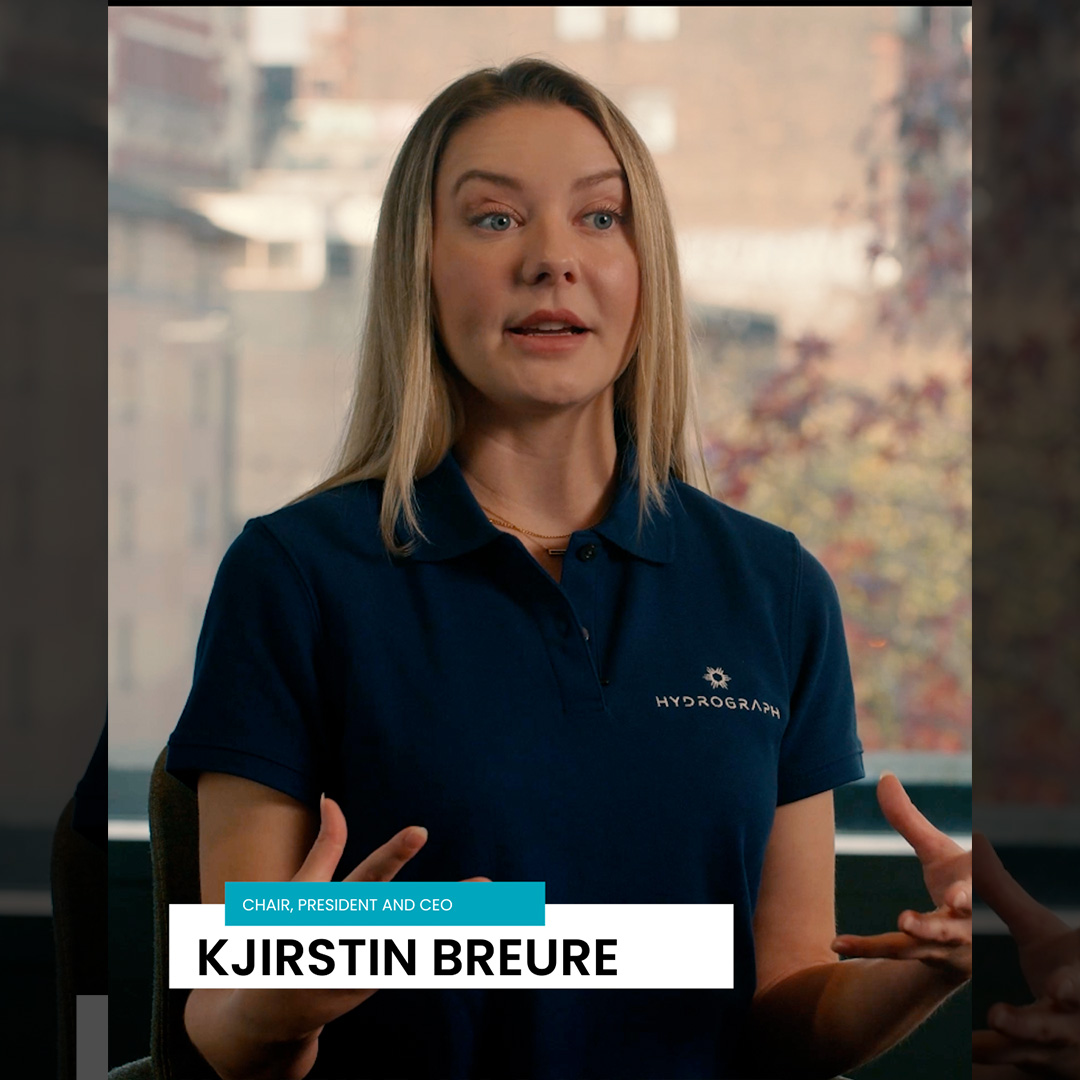
Unlimited quantities.” Two words that should fundamentally reframe how engineers and scientists think about graphene as a formulation tool. In this Ask Me Anything video, HydroGraph Chair, President & CEO Kjirstin Breure unpacks the Texas expansion plan – and why access to a dedicated acetylene pipeline is the supply chain event the advanced materials world has been waiting for.
The problem was never graphene’s potential. It was supply. HydroGraph is the solution.
In this Ask Me Anything video, HydroGraph Chair, President & CEO Kjirstin Breure was asked: “Where does HydroGraph’s manufacturing roadmap create real disruption next?”
She didn’t talk about incremental gains. She talked about a complete shift in the industry.
Specifically: a new Austin headquarters built around engineering talent and focused on continuous innovation – and, more critically, access to an acetylene pipeline in southern Texas that will enable HydroGraph to produce graphene in effectively unlimited quantities.
Unlimited. Not “increased.” Not “scaled-up pilot batches.” Unlimited.
For anyone who has ever shelved a promising graphene formulation because they couldn’t guarantee supply continuity for a commercial product launch, that word carries significant weight.
Why This Matters to You (And Your Next Breakthrough Product)
If you work in R&D or product development, your version of the graphene problem likely sounds like one of these:
- “The performance data is compelling, but we can’t build a product roadmap on a material we can’t reliably source at volume.”
- “We’ve tried graphene in our formulations before, but batch-to-batch variability made it impossible to validate.”
- “Our product needs a reinforcement additive that actually disperses — most graphene we’ve tested just agglomerates and does nothing.”
- “The loading levels required to hit our performance targets make the economics unworkable.”
These are real objections, and they’ve been legitimate – until now. HydroGraph’s Fractal Graphene™ and Reactive Graphene already address the materials science side of those objections: 99.8% carbon purity, identical batch-to-batch consistency, and performance improvements at ultra-low loading levels (we’re talking 10–100x lower concentrations than conventional graphene). The Texas expansion addresses the final remaining variable: scalable graphene production for industrial applications, at a volume that can actually support commercial product lines.
The Austin Bet Is About More Than Location
The choice of Austin as HydroGraph’s innovation hub is deliberate. Austin’s engineering talent ecosystem, combined with proximity to the acetylene supply infrastructure that makes high-yield detonation-process graphene production possible, creates something most graphene companies don’t have: a virtuous cycle between R&D and manufacturing scale-up. New application insights feed faster into production refinements. New production capabilities feed back into formulation possibilities your competitors haven’t thought of yet.
For materials scientists working on next-generation biosensors or energy storage architectures – applications that demand not just high purity but extremely precise surface chemistry – this kind of integrated R&D-to-production feedback loop is the difference between a graphene supplier and a graphene partner.
So. What Are You Still Waiting For?
If your product development roadmap still lists graphene under “emerging materials to revisit in 18 months,” you are now officially on the wrong side of a supply inflection point. The question is no longer whether graphene at industrial scale is possible. The question is whether your product line will be positioned to take advantage of it before your competitors figure out that the bottleneck has been removed.
Watch the full Ask Me Anything video to hear Kjirstin Breure explain HydroGraph’s Texas expansion plan, the acetylene pipeline announcement on the horizon, and what unlimited scalable graphene production for industrial applications actually looks like in practice.
Then ask yourself what you’d do differently if supply was no longer the constraint.
Have a burning question of your own?
Submit your question below and one of our subject matter experts will get back to you directly.