
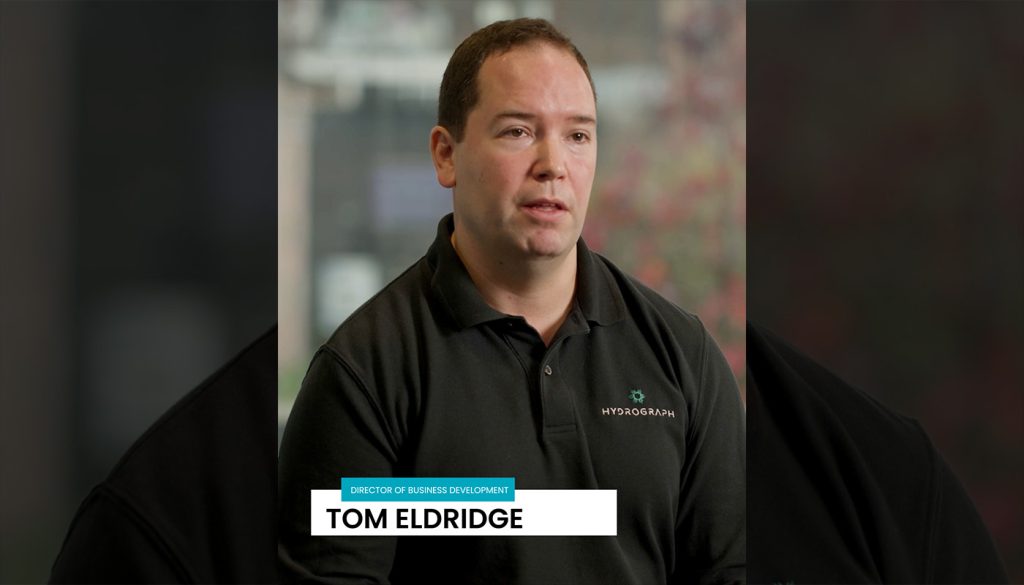
Great graphene, badly dispersed, is just expensive filler. Tom Eldridge, HydroGraph’s Director of Business Development, names the processing step formulators consistently skip and explains why it decides whether your additive delivers or disappoints.
Inspired by questions posed by innovative engineers, scientists and researchers across industries, this series is designed to provide salient answers to ignite your material change.
What important step in processing graphene is typically overlooked?
Quality and consistency. These are the factors formulators chase when selecting a graphene additive, and reasonably so. But a batch of 99.8% carbon content graphene that clumps the moment it hits a resin or a solvent isn’t a high-performance additive. It’s expensive filler.
Graphene’s mechanical, electrical, and barrier properties all depend on a functioning nanoscale network throughout the host material. Agglomerated platelets don’t build that network; they sit in it, inert. As HydroGraph’s Tom Eldridge puts it in this week’s AMA video, knowing how to apply graphene into a solvent, polymer, or ceramic matters just as much as the quality of the graphene itself. Most customers plan for material quality. Few plan for the process that unlocks it.
The spec sheet tells you what you bought. Dispersion tells you what you’ll get. Formulators who treat the second column as seriously as the first are the ones seeing the best performance at the lowest loadings. Everyone else is still wondering why their numbers don’t match the data sheet.
The results depend on the process. Book time with our team and find out what igniting material change actually looks like in your matrix.

Have a burning question of your own?
Submit your question below and one of our subject matter experts will get back to you directly.